

Sea freight is the default backbone for moving commercial goods between Chinese factories and the six GCC markets: the United Arab Emirates, Saudi Arabia, Qatar, Kuwait, Bahrain and Oman. When you plan China to GCC sea freight, the decision is rarely about a single rate.
Instead, it comes down to three questions. Which port pair connects your supplier to your buyer. Which load type fits your volume. And where exactly the handover is documented in writing. This overview explains the selection layer that sits above our individual LCL and FCL service pages, so you can brief a forwarder with the right inputs before asking for a quote.
Sea freight to Gulf countries starts with a port pair, not a price. A shipment is always a journey between two named ports, and every other choice depends on that pair. For any China to GCC sea freight plan, the port pair sets the customs entry point and the inland leg that follows discharge.
The same supplier in Guangdong may route through a different Gulf gateway than a supplier in Zhejiang. Meanwhile, the right box size follows from the cargo itself, not from a number on a rate sheet. Treat the route, the load and the handover as one linked decision.
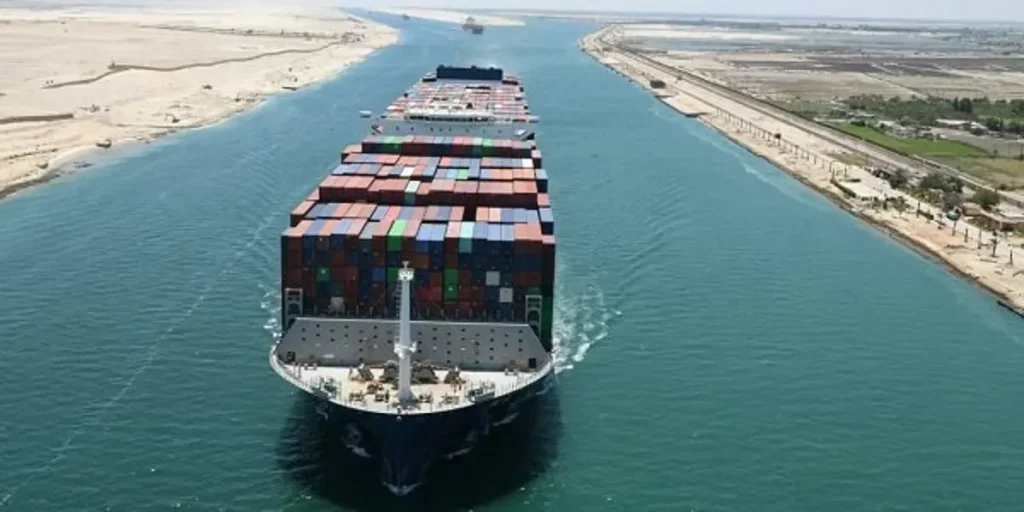
Why sea freight is a port-pair product
A sea freight move is defined first by its two endpoints. On the China side, the export gateway is set by where your goods are packed and by the carrier networks that call that terminal.
On the Gulf side, the gateway is set by where your consignee receives cargo and by the inland leg that follows discharge. Picking the pair early keeps the rest of the plan coherent, because the load type and the handover point both reference those two ports.
The GCC region spans several coastlines, so the gateway you choose determines the customs entry point and the onward distribution path. When you arrange China to GCC sea freight under the union framework, the first gateway also sets where conformity and clearance begin.
Consider the fit by market. A UAE gateway serves the northern emirates and re-export flows. For western Saudi demand, a Red Sea gateway is the better match. The eastern province and industrial belt, by contrast, are served from a Saudi Gulf gateway.
Qatar, Kuwait, Bahrain and Oman each have their own gateway that serves that market directly. Match the port to the final delivery city before you compare anything else.
The China and Gulf port landscape
China export gateways that commonly serve GCC trade include Yantian, Shekou and Nansha in the south, plus Ningbo, Shanghai and Qingdao further north. Each draws from a different manufacturing cluster.
Gulf gateways are broader than the six most cited ports. Beyond the major hubs there are secondary terminals such as Hamriyah and Sharjah, Jubail, King Abdullah Port, Shuwaikh and Shuaiba, and Salalah, each serving specific cargo and consignee needs. The list below is illustrative of common pairings and is not a service schedule.
| China export gateway | Gulf gateway (illustrative) | Typical cargo note |
|---|---|---|
| Yantian | Jebel Ali | General manufactured goods for UAE and re-export. |
| Shekou | Khalifa | Electronics and light assembly for Abu Dhabi emirate. |
| Ningbo | Hamad | Industrial parts and machinery for Qatar. |
| Shanghai | Dammam | Bulk retail and construction materials for eastern Saudi. |
| Qingdao | Jeddah | Western Saudi demand and Red Sea distribution. |
| Nansha | Sohar | Oman market and regional transshipment. |
This matrix is a selection aid, not a timetable. Confirm the schedule and free time with your forwarder, because sailing schedules and terminal windows change by carrier and by season. The point is to name a pair, then build the load and handover around it.
FCL or LCL: decide by volume, not by a headline rate
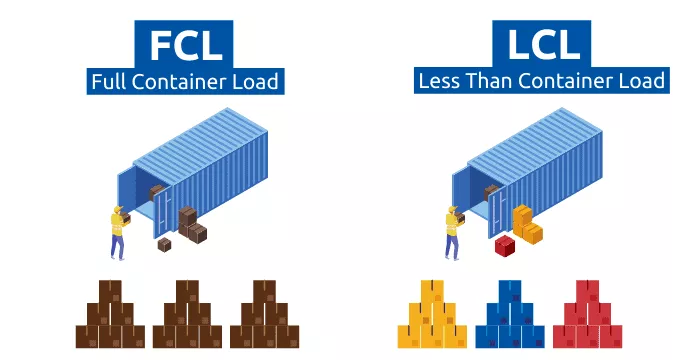
Whether you book a full container or share one is a math problem, not a pricing guess. Load type follows your chargeable volume and weight bracket. If your goods fill most of a container, a dedicated box is usually simpler to handle.
If your goods are only a fraction of a container, consolidation with other shippers can use space more efficiently. The comparison below ignores rates entirely and focuses on the volume logic.
For the full breakdown of each option, our LCL and FCL service pages explain consolidation and dedicated box handling in detail. The table is an illustrative bracket only.
| Chargeable volume | Suggested load type | Why |
|---|---|---|
| Under roughly 3 CBM | LCL | Too small to use a container efficiently, so sharing space suits the shipment. |
| About 3 to 10 CBM | Either, compare handling | Mid bracket where both options are workable depending on cargo shape. |
| Over roughly 10 to 15 CBM | FCL usually | Approaching container fill, so a dedicated box simplifies control. |
| One full container or more | FCL China to UAE style booking | A full box removes consolidation handling and split delivery points. |
| Several small buyers, one origin | LCL to Gulf countries style consolidation | Multiple destinations served from one consolidated departure. |
The bracket above is illustrative. Weight density, cargo shape and packaging can shift the break point, so confirm the chargeable volume with your forwarder before locking the load type.
The key habit is to decide on volume first, then read any rate against that decision rather than letting a rate choose the box for you.
Regional distribution under the GCC Customs Union
The Gulf Cooperation Council operates a Customs Union with a GCC Common External Tariff and one-entry regional distribution principle. In practice, goods cleared at a single GCC entry point may then move to other member states under the union framework, which can be simpler than clearing separately in every country.
The GCC Secretariat publishes the unified tariff and union rules at gcc-sg.org. Businesses should read those notes alongside national procedures.
The simpler one-entry path is not automatic across every commodity and every route. Destination rules still apply, and some goods need product conformity steps before they can be sold.
Saudi Arabia, for example, uses SASO and the SABER platform to govern conformity assessment and shipment certification. The UAE relies on Dubai Customs for local clearance and port procedures. Qatar, likewise, defines its entry requirements through Qatar Customs.
Each authority keeps its own guidance, and re-distribution between countries must follow the union and local rules together.
So the regional logic is a planning advantage, not a shortcut that removes destination compliance. Clear at one entry, then move regionally only where the rules permit, and confirm the permitted path with your forwarder and the relevant authority.
The GCC Common External Tariff and one-entry regional distribution model reduces duplicate paperwork in many cases. Even so, it does not replace per-market product and labeling obligations.
Where the handover point is written
The handover is the moment and place where responsibility for the goods transfers between parties. On a sea freight quote it appears as a named trade term, often expressed through Incoterms such as FOB at the China port or CIF/CFR at the Gulf port.
The term decides who books the main leg, who handles export clearance, and who owns the cargo if something goes wrong before the agreed point.
Read the quote for the exact wording, not for a summary. The handover should name a port, a party and a step. If the quote says the goods are delivered to a Gulf gateway but your buyer is inland, the inland leg is a separate scope that must be stated clearly.
A vague handover is the most common source of surprise charges. Write it down and confirm it before you commit.
Documents that support the handover
- Commercial invoice and packing list that state the cargo, value and dimensions.
- Bill of lading naming the shipper, consignee and notified party at the agreed port.
- Certificate of origin where the destination authority requires it for tariff treatment.
- Conformity documents such as SABER for Saudi-bound goods, confirmed before departure.
- Any destination license or pre-clearance the local authority requests in writing.
How to choose: three questions
Choosing a service on this page comes down to three questions. First, which port pair connects your supplier to your buyer. Second, which load type fits your measured volume bracket. Third, where is the handover written in the quote.
Answer those three and the rest of the plan follows. If speed matters more than ocean cost, our air freight service and the China to Gulf air freight guide cover the faster lane, while the compare every shipping option page sets sea against air and express.
For a managed move that handles routing, load type and handover together, our complete China to GCC shipping service coordinates the steps end to end. And for market-specific entry, our shipping to the United Arab Emirates page explains the UAE gateway and clearance context.
In short, China to GCC sea freight is a port-pair, volume-bracket and handover decision. Name the pair, size the load, and write the handover.
That order keeps your quote comparable and your delivery predictable.
FAQ
FCL or LCL: what volume decides it?
Load type follows chargeable volume and weight, not a rate. Under about 3 CBM, shared consolidation is usually efficient. Between roughly 3 and 10 CBM, both options can work. Above about 10 to 15 CBM, a full container often makes sense. Confirm your measured volume with the forwarder, because density and packaging can shift the break point.
Does the GCC Customs Union mean one clearance covers all six countries?
Not automatically. The GCC Customs Union and Common External Tariff let goods cleared at one entry point move regionally in many cases, which can reduce duplicate paperwork. Destination rules and product conformity still apply in each market. Confirm the permitted re-distribution path with your forwarder and the relevant authority before relying on one entry.
Which China port pairs with which Gulf gateway?
The pair depends on your supplier location and buyer city. Southern China gateways like Yantian, Shekou and Nansha feed UAE, Qatar and Oman hubs. Northern gateways like Ningbo, Shanghai and Qingdao feed Saudi and wider Gulf hubs. The choice sets the customs entry point and the inland leg, so match the port to final delivery first.
Where exactly is the handover point written in a quote?
The handover appears as a named trade term, commonly an Incoterms rule such as FOB at the China port or CIF/CFR at the Gulf port. It states who books the main leg and who owns the cargo at transfer. Read the exact wording, confirm the port and party, and treat any vague handover as a question to resolve before booking.
What does regional distribution after one entry require?
One entry plus inland movement can be simpler than per-country clearance, but you must follow union and destination rules. Keep conformity documents ready, such as SABER for Saudi-bound goods, and confirm labeling and licensing per market. The GCC Common External Tariff helps, yet it does not remove per-market product obligations or local authority checks.
Can I switch load type after the shipment is booked?
Switching from LCL to FCL or back is possible only before consolidation or container loading is fixed, and it changes documents, space and handover scope. Once cargo is stuffed or a booking is cut off, the change may not be available. Confirm the cutoffs and free time with your forwarder early so the load type is settled in time.