

النقاط الرئيسية
- Volume and weight narrow the choice first. Then check supplier ready dates and destination handover.
- A 20 ft holds about 33 m³. A 40 ft holds about 67 m³. A high cube holds about 76 m³.
- FCL gives one seal and direct handover. LCL gives flexibility for small or staggered orders.
- Control and flexibility pull in opposite directions. Decide which matters more for this shipment.
- Use this guide to pick FCL or LCL first, then jump to the matching preparation guide before booking.
You have decided to ship by sea. The remaining choice is how to load: a dedicated container (FCL) or shared space (LCL). Both move on the same routes, but they differ in control, handling, and how they fit staggered suppliers.
Four checks narrow the choice. See our خدمة الشحن من الصين إلى دول مجلس التعاون الخليجي for the routes both options use.
Step 1: Read your volume and weight
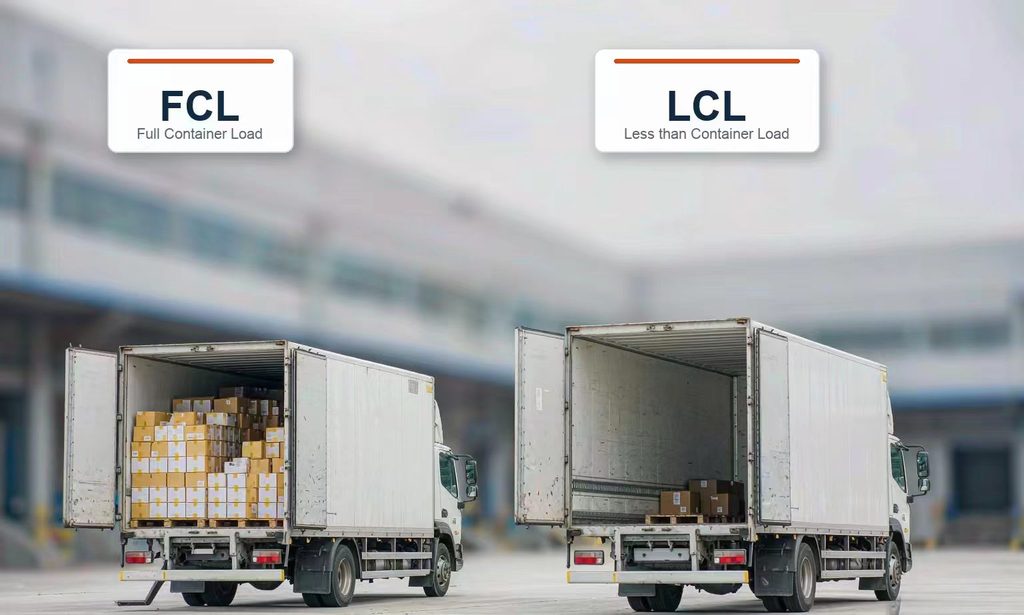
Volume sets the starting point. A 20 ft container holds about 33 m³. A 40 ft standard holds about 67 m³. A 40 ft high cube holds about 76 m³. Compare your cargo against those figures.
| Cargo picture | Leans | Reason |
|---|---|---|
| Fills a useful share of a container | FCL | Dedicated space gives more control |
| Small share of a container | LCL | You avoid paying for empty space |
| Heavy for its volume | FCL, often 20 ft | Weight caps payload before cube fills, and local road limits may cap it even earlier |
| Light and bulky | 40 ft high cube or LCL | Volume sets the charge, so extra height helps |
Weight can override volume. Dense goods such as stone or steel can hit the payload limit while the box still looks half empty.
A larger box will not help then. Splitting into two LCL lots or two smaller FCL loads may be safer. Bring both numbers to the decision.
Step 2: Count suppliers and ready dates
Orders from several suppliers change the answer. Timing matters as much as size.
| Supplier picture | Leans | لماذا |
|---|---|---|
| One supplier, one ready date | FCL | Simple stuffing, one handover |
| Several suppliers, same window | Either | Consolidate, then choose by volume |
| Several suppliers, staggered dates | LCL | Ship batches as they become ready |
| One late supplier holds the rest | LCL | Ship ready goods early via LCL instead of holding a full-container plan for one late factory |
If ready dates are far apart, ship in batches. LCL makes small early lots practical. If all orders land together, volume decides.
LCL does not remove cut-offs. A late supplier can still miss the consolidation deadline. The gain is that goods already ready can move on an earlier sailing.
Step 3: Check the destination handover
The two options end differently. Make sure your buyer can handle the one you pick.
| Handover factor | FCL | LCL |
|---|---|---|
| What arrives | Your sealed container | Goods sorted at a warehouse |
| Number of touches | Few | More, at both ends |
| Empty container | You return it | Not your task |
| Collect from | Port or yard | Consolidation warehouse |
A buyer without unloading equipment may struggle with a full container. A buyer far from the port may prefer warehouse release.
In both cases, customs clearance and release must happen before physical handover or warehouse pickup. Fees must be settled first.
Without clearance capability or a local importer of record, the buyer cannot take delivery, even under LCL. Check the destination setup before you commit.
شركتنا UAE guide و Saudi guide explain how delivery points work in the Gulf.
Step 4: Weigh control against flexibility
This is the real trade-off. FCL gives one seal, fewer hands, and direct control. LCL gives smaller commitments and easier batching.
| Priority | Better fit | لماذا |
|---|---|---|
| Control of loading and seal | FCL | You own the box end to end |
| Low commitment per order | LCL | You pay for the space you use |
| Frequent small replenishment | LCL | Batching stays flexible |
| Restricted or sensitive goods | FCL | Fewer mixed touches |
Be clear about which side matters for this shipment. Different orders from the same buyer may justify different answers.
Decision summary
| If your priority is | Choose | Then read |
|---|---|---|
| Control and a single seal | FCL | FCL container choice and handover |
| Flexibility and smaller batches | LCL | LCL consolidation and preparation |
| Comparing with air or express | Neither yet | Express, air, or ocean |
For port and route choice, read الشحن البحري من الصين إلى دول مجلس التعاون الخليجي. Our خدمة الشحن بالحاويات الكاملة (FCL) و LCL service pages show how we handle each option.
الأسئلة الشائعة
What is the main difference between FCL and LCL?
FCL books a whole container for one shipper. LCL shares a container among several shippers. FCL gives one seal and fewer handlings. LCL suits smaller loads and lets you ship batches as suppliers finish. Both move on the same sea routes, so the choice is about control, cost structure, and timing.
Can I mix FCL and LCL across different orders from the same supplier?
Yes. Decide each order on its own volume, ready date, and budget. A large urgent order may justify FCL while a small top-up moves as LCL. You do not need one mode for the whole year. Switch when the cargo profile changes.
What if my cargo is around 12 to 15 cubic metres?
That is a common borderline. Quote both options and compare them on total cost, not just the ocean leg. LCL adds destination deconsolidation charges. A 20 ft adds full-box cost. Weigh that against how soon you need the goods and how much control you want.
Which option gives more control?
FCL. You load one box, seal it once, and take delivery of the same sealed unit. LCL adds warehouse handling at both ends, so more parties touch the goods and the handover has more steps. Fewer touches mean fewer chances for mix-ups.
Where can I read the preparation detail?
Start with the choice on this page. Once you know which loading method fits, open the matching guide. The FCL guide covers cube, weight, and container choice. The LCL guide covers consolidation and ready-date alignment. Both go deeper on the steps this decision page leaves out.
الخلاصة
The FCL versus LCL choice is a sequence of checks, not a single rule. Read volume and weight, then count suppliers and ready dates. Confirm the destination handover. Then decide what matters more: control or flexibility.
المصادر والنطاق: Container capacity and payload figures come from Maersk cargo weight limits, checked 23 November 2026. Payload limits vary by country and by container type.
Local road limits can be lower than the container payload. We publish no rates and no transit commitments. Confirm figures with your carrier and the destination customs authority. This article is informational only and is not legal, customs, or tax advice.