

النقاط الرئيسية
- LCL means your goods share a container with other shippers. You pay for the space you use.
- It fits cargo that is too small for a full container but too large to send as a parcel.
- Cost follows the weight or measurement rule, so measure both volume and weight before you ask for a price.
- When several suppliers ship to one buyer, align their ready dates, documents, and export clearance before you book.
- At destination you collect from a warehouse, not a sealed container. Plan that handover and the extra handling time.
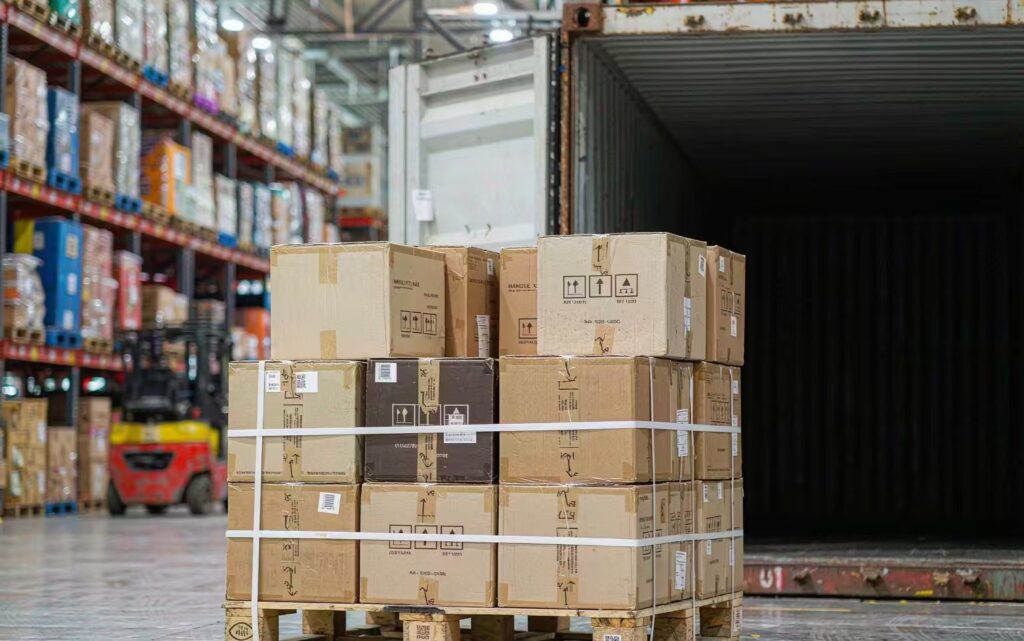
LCL ocean freight lets a small shipment move in a shared container. You book space rather than a whole box. That helps when your cargo is too big for a parcel but too small to fill a container.
This guide explains when LCL makes sense and how the cost is built. It also shows how to prepare cargo for a shared load.
When LCL fits your cargo
Start with volume and readiness, not with habit. LCL works when your goods will not fill a container on their own.
| Situation | LCL fit | لماذا |
|---|---|---|
| Under a container load | Strong | You avoid paying for empty space |
| Several small supplier orders | Strong | One buyer can combine them into one shipment |
| Trial order or repeat small batch | Strong | You keep commitment low while you test demand |
| Bulky but light goods | Depends | Volume, not weight, drives the chargeable figure |
| One full production run | Weak | A dedicated container usually gives more control |
Do not treat LCL as the cheap default. It adds handling at both ends. That extra work shows up in the cost and in the number of hands that touch your goods.
What a shared container actually costs
LCL pricing has several layers. We do not publish rates. We do explain the logic, so you can read a quote with confidence.
| Cost layer | What it covers | What to check |
|---|---|---|
| Origin handling | Receiving, measuring, loading into the shared box | Measurement rules and minimums |
| Ocean leg | Port-to-port carriage of the container | Which charges are included |
| Destination handling | Unloading, deconsolidation, warehouse release | Who pays each fee; check CIF pairing |
| Clearance and delivery | Declaration, duty, local delivery | Whether they sit inside or outside the quote |
Carriers compare cubic volume with weight and bill on whichever figure is larger. That is the weight or measurement rule. On most China-to-Gulf lanes, the working conversion is 1 CBM to 1,000 kg. Many carriers also apply a one-cubic-metre minimum. Measure both before you ask for a price, and confirm the minimum in your quote.
Watch for one common trap. An artificially low ocean freight can be offset by inflated destination charges. Under CIF terms, a cheap headline sea freight can be misleading. It may hide high unloading, documentation, and delivery-order fees at Jebel Ali or Dammam. Ask for a full destination breakdown, not just the ocean leg.
شركتنا دليل الاقتباس سطراً سطراً walks through each charge in detail. The freight cost breakdown page lists the other charges that often sit outside a headline number.
Align your suppliers before you book
Multi-supplier shipments fail on timing, not on freight. One late factory can hold the whole consolidation.
| Supplier | Order ready | Action |
|---|---|---|
| A | Early | Book warehouse receiving, hold stock |
| B | On target | Confirm packaging and labels now |
| C | Late | Decide: wait, split, or drop from this batch |
Set one cut-off date. Tell every supplier the same date. Track each order against it. If one supplier slips, decide early whether to wait or ship without them.
Also confirm the paperwork early. Ask whether each supplier will clear export customs on its own. Then decide on the invoices. You can combine them into one master set for destination clearance, or keep a separate set for each factory.
Separate document sets often mean multiple delivery-order and clearance fees at destination. One master set keeps the handover simple, but only if every supplier sends matching data.
For the receiving steps in detail, see the قائمة مراجعة عملية الدمج.

Prepare cargo for a shared load
Your goods will sit beside other shippers’ cargo. That changes how you pack and label.
Measure and declare accurately
Give both cubic volume and gross weight. Round up honestly. A wrong figure can trigger a re-measure fee or a hold.
Pack for multiple handlings
LCL cargo moves through more hands than a full container. Use strong cartons, clear marks, and internal padding. Loose packaging rarely survives the trip.
Heavy or bulky goods often go on pallets. If you use solid timber, it must carry an IPPC treatment mark under ISPM 15. GCC ports, including Jebel Ali and Dammam, can hold or reject untreated wood. Heat-treated plywood or plastic pallets avoid that problem.
Label every piece
Put the buyer name, shipment reference, and destination on each carton. Add handling marks where needed. The packing and labels page sets out the field details.
At destination: the deconsolidation handover
LCL does not arrive as your own sealed box. The container is unloaded at a warehouse. Your goods are sorted with other shipments, then released to you or your broker.
That adds a step. Confirm who collects the goods, who clears customs, and where the warehouse sits.
Deconsolidation and warehouse sorting also take time after arrival, so allow for that in your delivery plan. Our UAE shipping guide explains how delivery points work in the Gulf.

Route and port choice
Most China-to-Gulf LCL moves sail on direct services to a regional hub. Common hubs include Jebel Ali in Dubai and Dammam or Jeddah in Saudi Arabia. The hub you choose shapes both the customs port and the inland leg to your buyer.
Route and port selection belong in a separate guide. See الشحن البحري من الصين إلى دول مجلس التعاون الخليجي for that decision. Our LCL ocean freight service page shows how we handle shared loads.
Where LCL stops and FCL starts
Volume is the turning point. Many shippers start comparing FCL once LCL cargo reaches roughly 12 to 15 cubic metres. At that level, destination deconsolidation charges no longer fall as a share of your total. A dedicated box can start to make more sense.
We do not compare the two in full here. Use the FCL or LCL decision guide to work through that choice. Our FCL ocean freight service page covers the dedicated option.
الأسئلة الشائعة
What does LCL mean in ocean freight?
LCL means less than container load. Your goods share a container with other shippers, and you pay for the space you use. It suits cargo that is too small to fill a container but too large to send as a parcel.
How is an LCL charge calculated?
Carriers usually compare cubic volume against weight and charge on the higher figure. That is the weight or measurement rule, often converted at 1 CBM to 1,000 kg. Give both numbers when you ask for a price, and confirm the minimum volume applied at origin.
At what volume does FCL become cheaper than LCL?
There is no fixed number, but many shippers start comparing FCL around 12 to 15 cubic metres. At that size, destination deconsolidation and handling charges stop shrinking as a share of the total. A dedicated container can make better sense. Price both options before you decide.
Does LCL take longer than FCL?
Usually yes. A shared container waits at origin until the carrier has enough cargo to stuff the box. It waits again at destination while the warehouse unloads and sorts it. Both steps add time outside the sea leg. We do not publish transit commitments, so ask your carrier for a current schedule.
Can I ship batteries or hazardous goods by LCL?
Usually not on a standard shared service. One undeclared dangerous item puts other shippers’ cargo at risk. Carriers and consolidation warehouses commonly refuse batteries and regulated goods. Ask about a dedicated dangerous-goods service if your cargo falls into that category.
الخلاصة
LCL works when your cargo size and supplier timing line up. Measure volume and weight, set one cut-off date, and confirm every supplier’s documents and export clearance. Pack for shared handling and plan the destination handover before the vessel sails. Get those steps right and a shared container becomes a predictable move.
المصادر والنطاق: Cost logic reflects standard weight-or-measurement practice in ocean consolidation. Pallet treatment follows the ISPM 15 standard set by the International Plant Protection Convention, checked 18 November 2026.
We publish no rates and no transit commitments. Charges, minimums, and warehouse procedures vary by carrier and port. Confirm all figures in your quote. This article is informational only and is not legal, customs, or tax advice.